


Flat Roof Leaking? How to Find and Fix the Cause
Most flat roof leaks come from a few places: water ponding on the surface, blistered or cracked felt, a failed upstand or flashing where the roof meets a wall, a blocked outlet or a loose edge trim. Old felt that has reached the end of its life leaks almost everywhere. Water often travels before it drips, so the stain inside is rarely right under the fault.
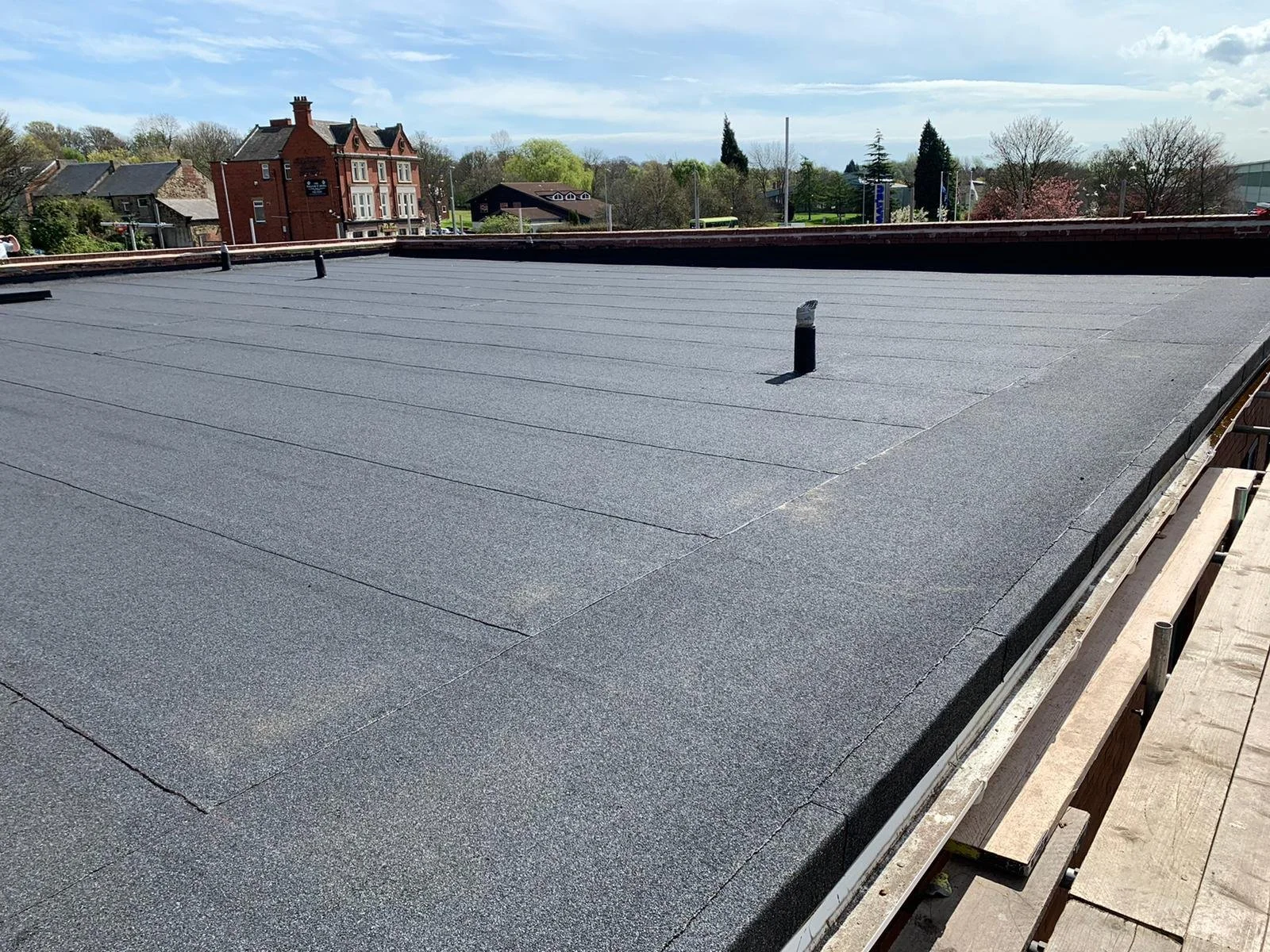
A flat roof leaking into a bedroom, kitchen extension or garage is one of the most common calls we get. Across Tyneside there are thousands of them: rear extensions on terraces in Heaton and Jesmond, dormers on Gosforth semis, garages and the flat-roofed flats and bungalows built in the sixties and seventies. The good news is that most leaks have a clear cause, and many can be repaired without a new roof.
01/Why flat roofs leak
A flat roof is never truly flat. It should have a gentle fall so water runs off to a gutter or outlet. When something stops that water leaving, or the covering splits, it finds a way in.
Ponding
Puddles that sit for days after rain mean the deck has sagged or the fall was never right. Standing water ages the covering and finds every weak joint.
Blistered or cracked felt
Sun and frost dry felt out. Blisters form where air or moisture is trapped underneath, then crack and split open.
Upstands and flashings
Where the roof meets a wall, the felt turns up and is covered by lead or a flashing. When that joint fails, water runs straight behind it.
Blocked outlets
Leaves, moss and silt block outlets and gutters. Water backs up over the edge of the covering and gets underneath.
Edge trims
Loose or badly lapped trims at the front edge let wind-driven rain under the felt, a common fault on exposed North East streets.
End of life
Traditional felt typically lasts 10 to 20 years. Past that point it leaks in more than one place and patching stops working.
If you want to know where your roof sits on that timeline, our guide to how long a roof lasts covers felt, GRP and EPDM.
02/Why the drip is rarely under the hole
On a flat roof, water that gets through the covering often runs along the deck boards or the top of a joist before it drops. It follows the fall of the roof and drips at the first low point it reaches. A stain in the middle of a ceiling can start at the wall upstand a metre or two away.
This is why patching the felt directly above a stain often fails. Finding the real entry point means looking at the whole roof: the upstands, the edges, the outlets and any joins around rooflights or soil pipes.
03/Is it a leak or condensation?
Not every damp patch under a flat roof is a leak. Many older flat roofs have little or no insulation and ventilation. Warm, moist air from the room below condenses on the cold underside of the deck and drips back down.
- Likely a leak. The damp appears during or soon after rain, gets worse in heavy or wind-driven rain and stays in one spot.
- Likely condensation. The damp shows on cold, dry days, spreads across the ceiling and is worst over kitchens and bathrooms.
Our guide to loft condensation and roof ventilation explains how to tell the two apart in more detail.
04/What to do while you wait for a roofer
Please do not climb onto a wet flat roof yourself. Old decks can be soft, edges are often unguarded and felt is slippery in the rain. These steps are safe to do from inside or from the ground:
- Put a bucket under the drip and move furniture, rugs and electricals away.
- If the ceiling is bulging with water, keep clear of it. If water is near a light fitting, switch off that circuit at the consumer unit.
- Take photos of the stain and the date. They help us trace the leak and help with any insurance claim.
- From a bedroom window, look for ponding, a blocked outlet or a lifted edge, and note what you see.
A roofer can often make the roof safe on a first visit with a temporary patch or sheet. That buys time. It does not fix the cause. If you are thinking of claiming, read does home insurance cover roof leaks first.
05/Flat roof leaking: patch, overlay or replace?
Once the cause is found, there are three ways to deal with it. The right one depends on how old the covering is and how much of it has failed.
| Option | When it makes sense | Watch out for |
|---|---|---|
| Patch repair | One clear fault on a covering that is otherwise sound, such as a split, a blister or a failed upstand. | A patch on tired felt just moves the leak somewhere else. |
| Overlay | The deck is dry and solid, but the covering is ageing. A new membrane or liquid coating goes over the old one. | Trapped water under the old felt will rot the deck. The deck has to be checked first. |
| Replacement | The felt is past its life, the deck is soft or ponding is bad enough that the fall needs correcting. | Costs more, but it is the only option that fixes a sagging or rotten deck. |
Failed lead or flashings at a wall or dormer cheek are often repaired on their own. Our lead flashing guide explains what is involved. If replacement is on the cards, our guide to flat roof replacement cost covers typical prices, and garage owners should read garage roof replacement cost.
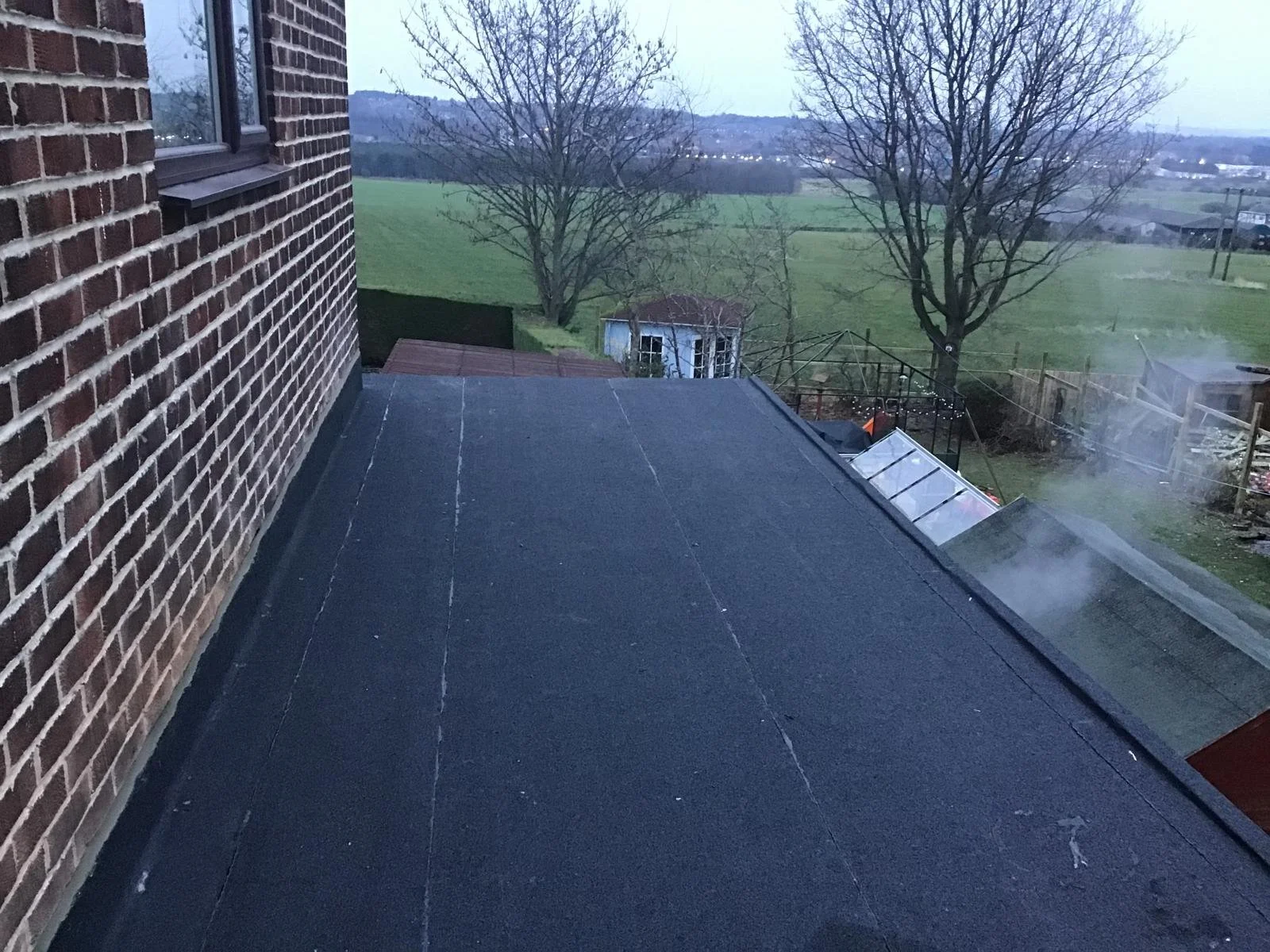
You can see a finished job like this in our garage roof re-felt in Fawdon project.
06/What a flat roof leak repair typically costs
Prices vary with the size of the roof, the covering and how easy it is to reach. These are typical UK ranges from current 2026 cost guides, rounded:
| Job | Typical cost |
|---|---|
| Finding the leak, no repair that day | £80 to £250 |
| Temporary make-safe or sheeting | £100 to £400 |
| Small felt, GRP or EPDM patch | £150 to £600 |
| Larger felt patch, up to about 2m² | £300 to £800 |
| Lead repair at a wall or dormer cheek | £200 to £400 |
| Liquid coating over the existing roof | £60 to £100 per m² |
Scaffold or a tower for upstairs dormers and extensions adds to the price, and some guides quote figures before VAT. A written quote after someone has seen the roof is the only reliable number.
We look at the whole roof, take photos of what we find and give you a fixed written price. If a repair will do the job, that is what we quote for.
07/Common questions
Why does my flat roof only leak in heavy rain?
Heavy or wind-driven rain pushes water into places light rain never reaches, such as a failed upstand, a loose edge trim or an outlet that backs up. Ponding also gets deeper and covers weak joints.
Can a leaking flat roof be patched?
Yes, if the rest of the covering is in good condition and the fault is in one place. If the felt is old and brittle, a patch usually just moves the leak, and an overlay or replacement is better value.
Is ponding on a flat roof a problem?
Water that clears within a day or two after rain is usually fine. Puddles that sit for longer point to a sagging deck or poor fall, and they shorten the life of the covering.
How do I know if it is a leak or condensation?
A leak usually shows during or soon after rain and stays in one spot. Condensation shows on cold, dry days, spreads more widely and is worst over kitchens and bathrooms.
Flat roof leaking?
We survey flat roofs on extensions, dormers and garages across Gosforth, Newcastle and North Tyneside, show you photos of what we find and give you a fixed written price. See our flat roofing and felting, roof repairs and lead roofs and valleys pages for more.