Best Flat Roof Material: EPDM vs GRP vs Felt
For most UK homes EPDM rubber is the best all-round flat roof material: one seamless sheet, no flame needed to fit it and a life of 30 years or more. GRP fibreglass suits roofs that are walked on, and high performance torch-on felt is the budget choice that still lasts 20 to 25 years when laid properly.
Ask three roofers which flat roof material is best and you may get three answers. All three main systems work well when they are laid properly; the right one depends on the roof, how it is used and your budget. Here is how they compare on the jobs we do every week.
01/Quick comparison
EPDM rubber
30–40+ yearsOne-piece membrane, bonded with adhesive. Our usual choice for extensions, dormers and garages.
GRP fibreglass
25–30+ yearsHard, seamless resin finish. Best for balconies and roofs that are walked on.
High performance felt
20–25 yearsTorch-on layered system. Lowest cost and very repairable.
| EPDM rubber | GRP fibreglass | Torch-on felt | |
|---|---|---|---|
| Seams | None on most domestic roofs | None | Overlapping layers |
| Fitting | Cold-applied adhesive | Resin and matting, needs dry weather | Torch-on, needs a naked flame |
| Walkable | Light foot traffic | Yes | Light foot traffic |
| Cost | Mid | Mid to high | Lowest |
EPDM rubber
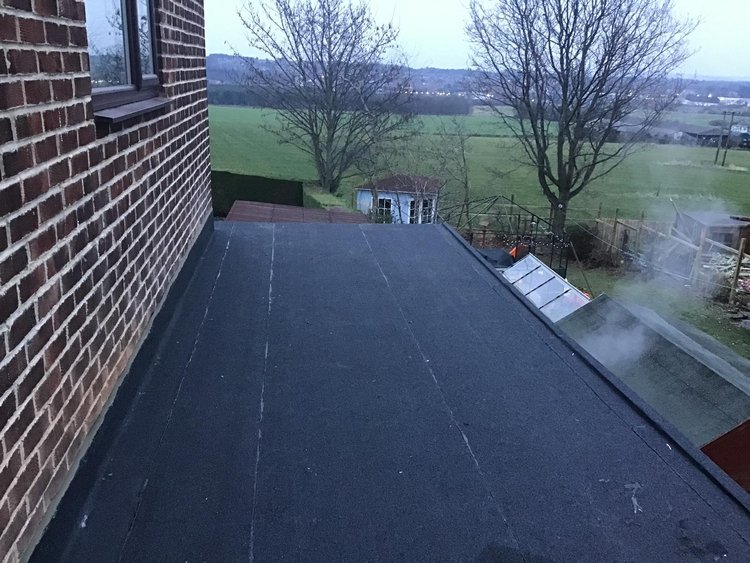
EPDM is a synthetic rubber sheet. On most house roofs it goes down in one piece, so there are no joins for water to find, and it stays flexible in frost and summer heat. Because it is glued rather than torched there is no fire risk to the house. Its weak points are the details, upstands, trims and outlets, which is where a good installer earns their money. See our EPDM rubber roofing page for how we lay it.
03/GRP fibreglass
GRP is built up on site from glass-fibre matting and resin, then finished with a coloured topcoat. It gives a hard, neat surface that copes well with foot traffic, so it suits balconies and roof terraces. It needs dry conditions and the right temperature to cure, so it is harder to lay in a North East winter, and poorly laid GRP can crack where the deck moves.
04/Torch-on felt
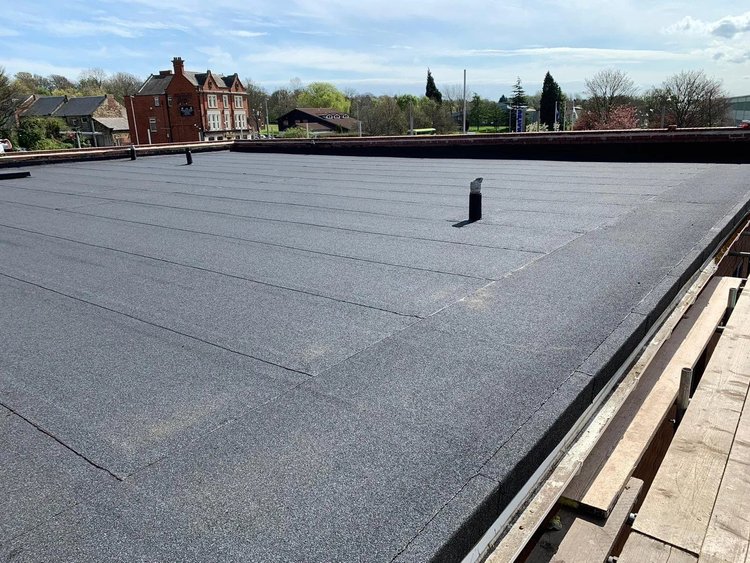
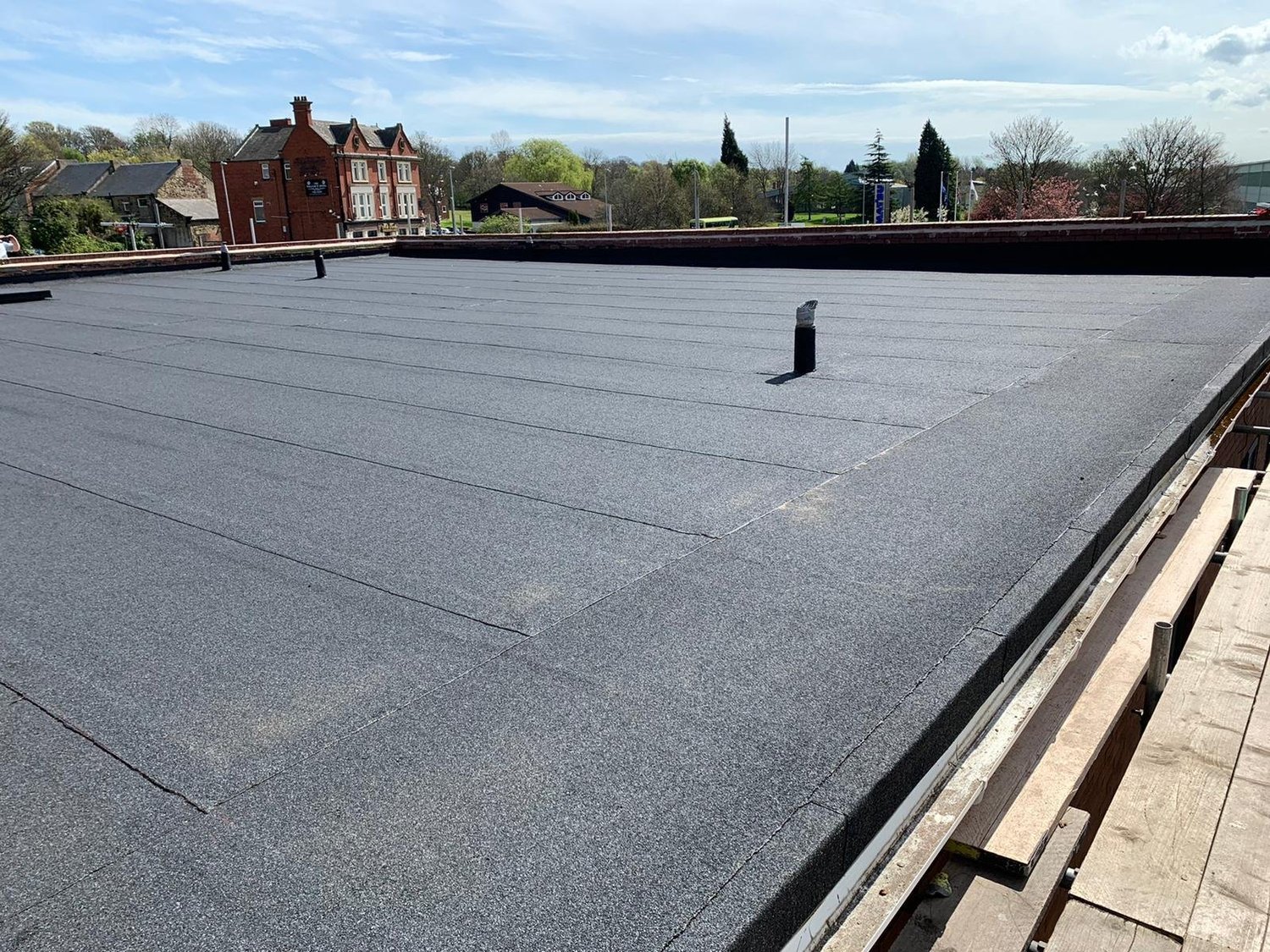
Modern high performance felt is a long way from the old pour-and-roll felt that gave flat roofs a bad name. A three-layer torch-on system laid on a sound deck with proper falls will last 20 years or more and is easy to repair. It is still the lowest cost option, but it needs a naked flame to fit, which rules it out on some roofs.
05/Which material for which roof?
Garage
EPDM or felt. See our garage roof replacement page.
Rear extension
EPDM for a long life with no seams.
Dormer
EPDM, as there is often no safe way to use a torch near tiles and timber. More in our dormer guide.
Balcony or terrace
GRP, for a hard walkable finish.
Porch or bay
EPDM or felt, with lead or EPDM flashings to the wall.
Tight budget
High performance felt.
How they cope with winter
All three handle cold, wet weather once they are laid. The difference is in fitting: felt and EPDM can be laid on most dry winter days, while GRP resin needs warmer, dry conditions to cure properly. If your flat roof is leaking now, a winter repair or a rubber roof can usually go ahead without waiting for spring.
07/What they cost
Felt is usually the cheapest, EPDM sits in the middle and GRP is often the most expensive, but the difference on a typical garage or extension roof is smaller than people expect because most of the cost is labour, the deck and the edge details. Our flat roof replacement cost guide has typical prices by size.
Getting a price
We lay EPDM rubber and torch-on felt on homes across Newcastle and Tyne & Wear. We will survey your flat roof, recommend the right system and give you a fixed written price.