


Lead Flashing: What It Is, Why It Fails & What It Costs
Lead Flashing: What It Is, Why It Fails & What It Costs
Lead flashing is the strip of sheet lead that seals the joint wherever a roof meets a wall, chimney, dormer or roof window. It is dressed over the tiles or slates and tucked into the brickwork so rain runs over the joint instead of into it. Repairing a section usually costs £150 to £450, and a full new set of chimney flashings £400 to £900.
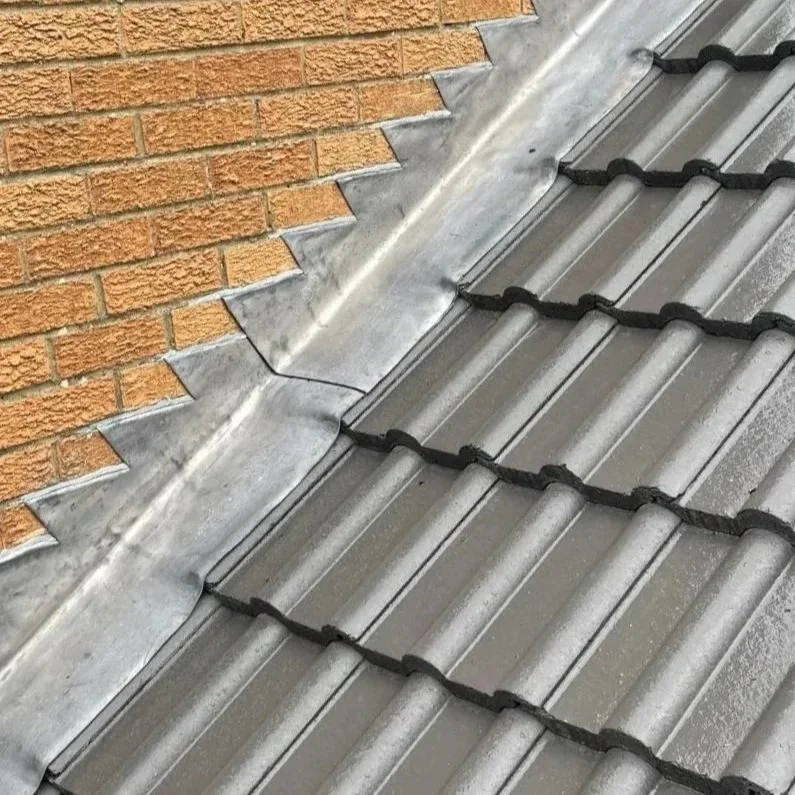
Flashings are small, but they are responsible for a large share of the roof leaks we are called out to. Here is what each type does, which lead should be used, how to spot a failing flashing, and what a proper repair involves.
01/The types of lead flashing on a roof
Step flashing
Sloping wallsCut in steps and chased into the mortar joints where a roof slope runs alongside a wall or the side of a chimney.
Soakers
Under the slatesSmall L-shaped pieces interleaved with each course of slate or tile at an abutment, covered by the step flashing above.
Apron flashing
Below a featureA single piece dressed over the tiles on the downhill side of a chimney, dormer or where a lean-to roof meets a wall.
Back gutter
Above a chimneyA small lead gutter on the uphill side of a chimney that carries water around the stack instead of against it.
Lead codes: which thickness goes where
Sheet lead is sold by "code", which relates to its weight and thickness. Using lead that is too thin is one of the most common shortcuts we find on failed flashings.
| Code | Thickness | Typical use |
|---|---|---|
| Code 3 | 1.32mm | Soakers only |
| Code 4 | 1.80mm | Step, apron and cover flashings |
| Code 5 | 2.24mm | Valleys, back gutters, flashings in exposed spots |
| Code 6–8 | 2.65–3.55mm | Flat lead roofs, box and parapet gutters |
Lead expands and contracts with temperature. Code 4 flashings should be fitted in lengths of no more than about 1.5 metres, with laps between them. Longer single pieces are prone to cracking and splitting within a few years.
Signs your flashing has failed
- Damp patches on a chimney breast, or on the ceiling where a roof meets a wall.
- Lead that has lifted, curled back or pulled out of the mortar joint — often after high winds.
- Cracks or splits in the lead, usually on long lengths or where it has been over-worked.
- Crumbling or missing mortar along the top edge where the flashing is chased in.
- A cement fillet, sealant or self-adhesive flashing tape instead of lead — a sign of an earlier cheap repair.
Self-adhesive tapes and sealants can stop a drip for a season, but they degrade in UV light and pull away from the brickwork. They also hide the real problem, so the eventual repair costs more.
Lead flashing repair costs
| Job | What's involved | Typical cost |
|---|---|---|
| Re-dress and re-point | Refix lifted lead and re-point the chase | £150 – £350 |
| Replace an abutment run | New soakers and step flashing along one wall | £300 – £700 |
| New apron flashing | Below a chimney, dormer or lean-to | £200 – £450 |
| Full chimney lead set | Apron, steps, soakers and back gutter | £400 – £900 |
Prices assume the roof can be reached safely with ladders and roof ladders. Chimneys on three-storey terraces or steep roofs usually need scaffold, which adds £500–£1,200. If the chimney pointing or flaunching is also failing, it makes sense to do everything under one scaffold — see our guide to chimney repair costs.
05/What a proper lead repair involves
Right code
Code 3 for soakers, Code 4 or heavier for flashings, and Code 5 for back gutters and exposed positions.
Chased in
Raked into a mortar joint at least 25mm deep, held with lead wedges and pointed with mortar — not stuck on the face of the brick.
Finished
Correct lengths and laps, clipped against wind lift, and treated with patination oil to stop white staining running down the roof.
Common questions
How long does lead flashing last?
Correctly specified and fitted lead flashing typically lasts 50 years or more. When it fails early it is usually because the lead was too thin, fitted in over-long pieces, or the mortar holding it into the wall has worn away.
Is there an alternative to lead?
Lead-substitute products and GRP trims are available and are sometimes used where lead theft is a risk. They can work well in the right place, but traditional lead is still the most durable choice for most chimneys and abutments.
Will my insurance cover a failed flashing?
Usually only if a single event such as a storm damaged it. Flashings that have deteriorated over time are normally excluded as wear and tear. Our guide to whether home insurance covers roof leaks goes into more detail.
Getting your lead work checked
We repair and replace lead flashings across Gosforth, Newcastle and North Tyneside, using the right code and proper chased-in detailing. Our lead roofing and chimney stacks pages cover the work in more detail.