


Storm Damage Roof Checklist: What to Do After a Storm
Storm Damage Roof Checklist: What to Do After a Storm
If you have storm damage to your roof, stay inside until the wind drops, then check the roof from the ground and photograph everything. Catch any leaks with buckets and move belongings away, but do not climb onto the roof. Call a roofer for an emergency temporary repair, tell your insurer as soon as you can and keep every receipt.
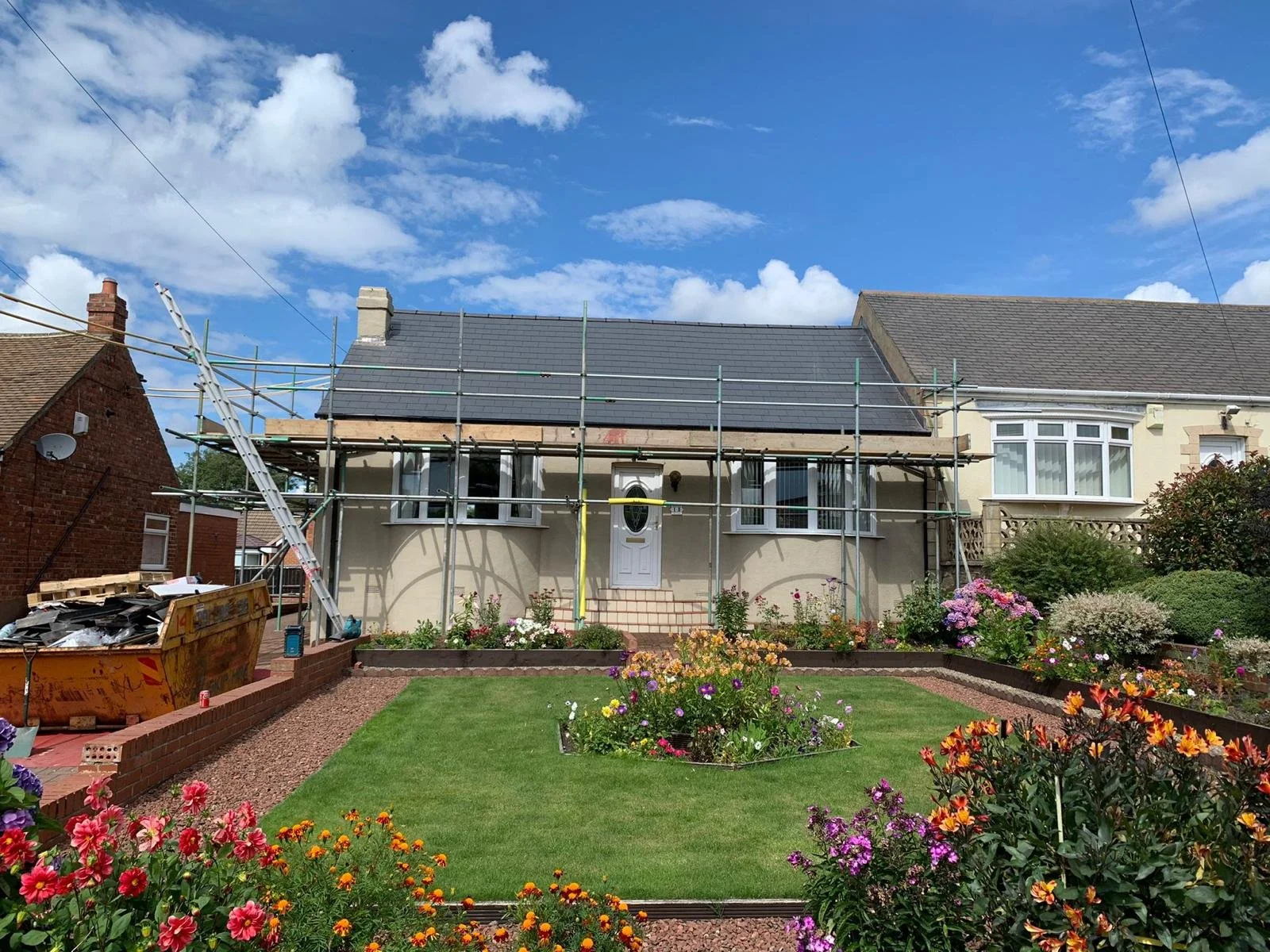
The storm season runs from 1 September, and autumn is when the wind starts to pick up across the North East. When it does, our phones ring with the same questions. Here is what to do after a storm damages your roof, in the order we would do it ourselves, plus the damage we see most on Tyneside houses, what repairs typically cost and how to spot the damage you cannot see from the street.
01/Stay safe, then look from the ground
Do nothing outside while the storm is still blowing. The Met Office advises against going out to repair damage during a storm, and says to keep away from walls, buildings and trees afterwards because they may have been weakened. A loose ridge tile or a slate coming off a two-storey roof can kill.
- Wait until the wind has dropped before you go outside.
- Stay clear of fallen or hanging power and phone cables, and report them to the network operator.
- Keep children and pets away from the side of the house where tiles or debris have fallen.
- Walk round the house and look at every roof slope from the garden, the street and the back lane. Binoculars help.
- Look for gaps in the tiles or slates, missing ridge tiles, bent lead, a leaning chimney pot, felt flapping on a flat roof and gutters hanging off.
- Check the ground for broken tile, slate or mortar. It tells you where the damage is even if you cannot see it.
Check on elderly neighbours too. The Met Office suggests making sure vulnerable neighbours and relatives are safe and helping them arrange repairs.
02/Photograph everything and protect the inside
Before anything is moved or fixed, take photos and short videos. Get wide shots of each roof slope, close-ups of anything on the ground, and every mark inside: wet ceilings, drips, damaged belongings. Your phone records the date and time, which helps if you claim.
Then limit the damage indoors:
- Put buckets or bowls under drips, with a towel underneath to stop splashing.
- Move furniture, electricals, bedding and anything precious out of the way.
- If water is near a light fitting or the ceiling is bulging, turn that circuit off at the consumer unit and keep out of the room.
- Keep damaged items. Insurers may want to see them, so only throw away anything that is a health risk.
Wet tiles and slates are slippery, storm-damaged ones can be loose, and a ladder on a windy day is an easy way to get badly hurt. Leave the roof to someone with the right access equipment and insurance.
Get an emergency temporary repair
Once you know water can get in, call a roofer. After a big storm every roofer in Newcastle gets busy, so the first visit is often a temporary repair to make the roof watertight. That usually means refixing or replacing a few tiles or slates, sheeting or tarping an exposed area, or covering a lifted flat roof until it can be done properly.
A good roofer will photograph the damage from up top and give you a written description. That report is useful for your insurer and tells you whether you need a small repair or more.
Tell your insurer as soon as you can. Many run 24-hour claims lines. The ABI advises speaking to your insurer before arranging emergency repairs where possible, and keeping the receipts if you pay for them yourself, because they form part of your claim. Keep invoices, photos and the roofer's report together in one place.
Insurers generally cover sudden storm damage but exclude wear and tear and damage that was already there. We cover that in detail in does home insurance cover roof leaks.
04/Common storm damage on North East roofs
Wind does not hit a roof evenly. It lifts at the edges, the ridge and anything that sticks up. These are the jobs we get called to most after a storm across Gosforth, Jesmond, Heaton and the rest of Tyneside.
Lifted or missing tiles and slates
Old nails corrode and slates slip, then the wind finishes them off. Common on Victorian and Edwardian terraces. See our guide to slipped roof tiles.
Ridge tiles off
Mortar-bedded ridges crack with age, and a strong gust can lift a whole run. Loose ridge tiles are heavy and dangerous.
Torn or lifted flashing
Lead at chimneys, walls and dormers can be peeled back, letting water run behind it into the house.
Chimney damage
Loose pots, cracked flaunching and blown-out pointing. Tall stacks take the full force of the wind.
Flat roof felt lifted
Wind gets under a loose edge on a garage, extension or dormer and peels the felt back.
Fallen branches and gutters ripped
Branches crack tiles and dent gutters. Gutters full of leaves catch the wind and pull off their brackets.
Chimney work often needs its own access, and the price depends on the stack. Our chimney repair cost guide gives typical figures.
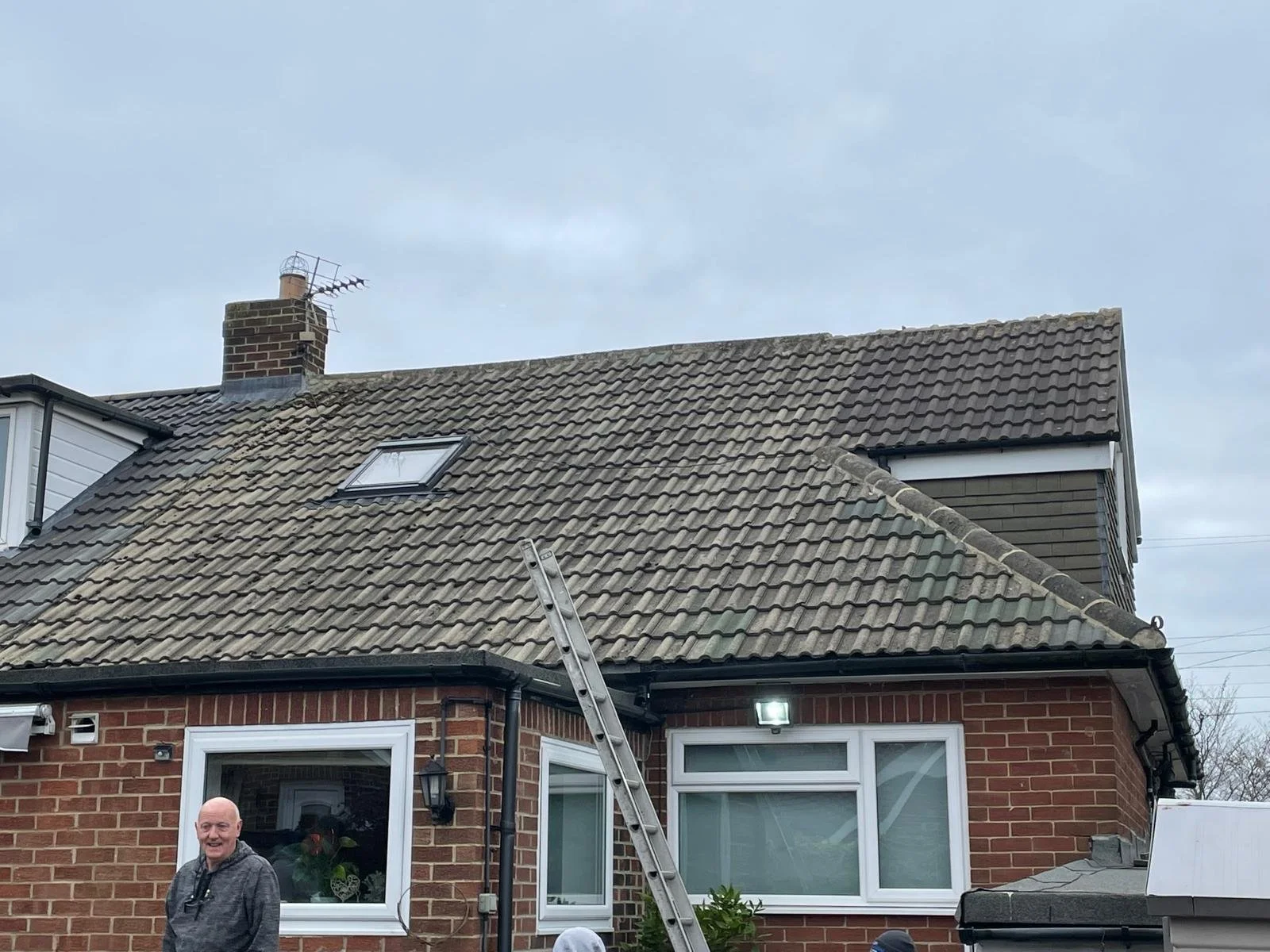
What storm damage roof repairs typically cost
These are typical UK prices for the jobs storms usually cause. Every roof is different, and access makes the biggest difference. A bungalow we can reach from a ladder costs less than a three-storey terrace that needs scaffold.
| Job | What's involved | Typical cost |
|---|---|---|
| Emergency call-out | Out-of-hours or same-day attendance | £100 – £300 on top of the repair |
| Temporary weatherproofing | Sheeting or tarping an exposed area | £100 – £300 |
| Replace broken tiles or slates | Refix or swap a small number of tiles | £150 – £300 |
| Ridge tile repair | Rebed or refix loose or missing ridge tiles | £250 – £600 |
| Flashing repair | Re-dress or replace torn lead | £200 – £500 |
| Flat roof patch | Repair a lifted or torn section of felt | £200 – £600 |
| Gutter repair | Refix brackets or replace a damaged section | £180 – £250 |
Scaffold typically adds £300 to £800 on a house, and more for tall or awkward roofs. If the storm has shown up wider problems, such as a whole ridge or a slope of failing slates, it can be better value to do the full repair while the scaffold is up.
Checking the loft for hidden damage
Some storm damage does not show from the street. A tile can crack without falling, or rain can be driven under the tiles and soak the felt. If you can get into your loft safely, take a torch the day after the storm and look for:
- Daylight showing through the roof covering.
- Wet or darkened patches on the timbers, felt or insulation.
- Torn or sagging roofing felt, or bits of tile and mortar lying on it.
- Damp around the chimney breast, which often points to flashing or flaunching damage.
- New stains on upstairs ceilings over the following week or two.
Only stand on the joists or boarded areas. If you find anything, photograph it and add it to your record. Dampness that appears in cold, still weather with no obvious damage can be condensation, which our guide to loft condensation versus leaks explains.
07/Common questions
What wind speed counts as a storm for home insurance?
Definitions vary by insurer, so check your policy. Many use the ABI benchmark of wind speeds over 55mph, and some also count very heavy rain, hail or snow. Insurers usually check the weather records for your area at the time of the damage.
Can I put a tarp on my roof myself?
We would advise against it. Getting a tarp onto a pitched roof means working at height on wet, possibly loose tiles, often while it is still windy. Catch the water inside and let a roofer with proper access make the roof watertight.
How quickly should storm damage be repaired?
As soon as possible. A missing tile or lifted flashing lets more water in with every shower, and that can turn a small repair into wet timbers, ruined insulation and ceiling damage. Insurers also expect you to take reasonable steps to stop the damage getting worse.
Storm damage on your roof?
We cover Gosforth, Newcastle, North Tyneside and Gateshead. We will make the roof safe, photograph the damage for your insurer and give you a fixed written price for the repair. See our roof repairs, ridge and dry verge, chimney stack and guttering pages for more on each job.