


Slate vs Concrete Roof Tiles: Which Should You Choose?
Comparing slate vs concrete roof tiles, natural slate lasts longer and weighs less, typically 75 to 100 years or more at around 25 to 35kg per m². Concrete interlocking tiles cost less, at typically £100 to £160 per m² fitted, and last 40 to 60 years, but they are heavier. If your house was built for slate, as most Tyneside terraces were, slate is usually the better match. On a 1930s to 1970s semi already in concrete, like-for-like concrete tiles are often the sensible choice.
If you are re-roofing, the covering you pick decides how the house looks, how long the roof lasts and what it costs. Here is how slate vs concrete roof tiles compare, along with clay plain tiles and fibre cement slates, so you can choose with the full picture.
01/The four main options
Natural slate
Longest lifeSplit stone, laid double-lapped and nailed or hooked. Welsh slate is the premium choice and what most Victorian roofs in Newcastle were built with. Spanish and Brazilian slate cost less and are widely used on re-roofs today.
Concrete interlocking tiles
Lowest costLarge moulded tiles that lock together side by side, such as Double Roman or flat modern profiles. Quick to lay, good at lower pitches and the standard covering on many post-war houses.
Clay plain tiles
TraditionalSmall fired clay tiles laid in overlapping courses. They weather well and hold their colour, but there are around 60 to the square metre, so they take longer to lay and need a steep roof.
Fibre cement slates
LightweightMan-made slates of uniform size and thickness. They give a slate look for less money and are the lightest option, though they do not last as long as natural slate.
Slate vs concrete roof tiles compared
| Covering | Typical fitted cost per m² | Typical lifespan | Weight per m² | Minimum pitch |
|---|---|---|---|---|
| Welsh slate | £140 – £260 | 100 years+ | 25 – 35kg | About 20° – 25° |
| Spanish or Brazilian slate | £100 – £220 | 60 – 100 years | 25 – 35kg | About 20° – 25° |
| Concrete interlocking tile | £100 – £160 | 40 – 60 years | 40 – 55kg | About 17.5° – 22.5° |
| Clay plain tile | £150 – £220 | 60 – 100 years | 65 – 75kg | About 35° |
| Fibre cement slate | £70 – £170 | 30 – 50 years | 20 – 25kg | About 20° – 25° |
These are typical UK supply-and-fit ranges from current published price guides, and they vary widely between sources. Scaffold, access, strip-out and any timber repairs are on top. Minimum pitch depends on the exact product and headlap, so we always check the manufacturer's data. For whole-roof prices, see our guide to how much a new roof costs.
Slate costs more per square metre mainly because of the material and the time it takes to lay. Each slate is fixed individually and the courses have to be set out carefully. Concrete interlocking tiles cover a lot of roof quickly, at around 10 tiles to the square metre, which keeps labour down.
03/Weight: the issue with swapping slate for concrete
A slate roof is relatively light. Concrete interlocking tiles typically weigh 40 to 55kg per m², against around 25 to 35kg for natural slate. Put concrete on a roof built for slate and the rafters and purlins carry a noticeably heavier load for the rest of the building's life.
The Planning Portal says Building Regulations approval is needed if a new covering increases the weight of the roof covering by 15 per cent or more, and advises checking with a structural engineer or surveyor before work starts. Going from slate to concrete is usually well over that. The roof may need strengthening, and building control will want to see that the structure can take it.
Clay plain tiles are heavier still. Going the other way, from concrete to slate, is lighter but still a change of covering. Our guide to re-roofing and Building Regulations explains what needs approval.
What suits your house
Victorian and Edwardian terraces. The terraces of Heaton, Jesmond, Sandyford and Gosforth were built with slate, and their roofs were designed around it. Plenty were later re-covered in concrete tiles, and those roofs often look heavy next to their neighbours. Natural slate keeps the look of the street. Spanish or Brazilian slate is the usual choice on a budget, with Welsh slate where the original appearance matters most.
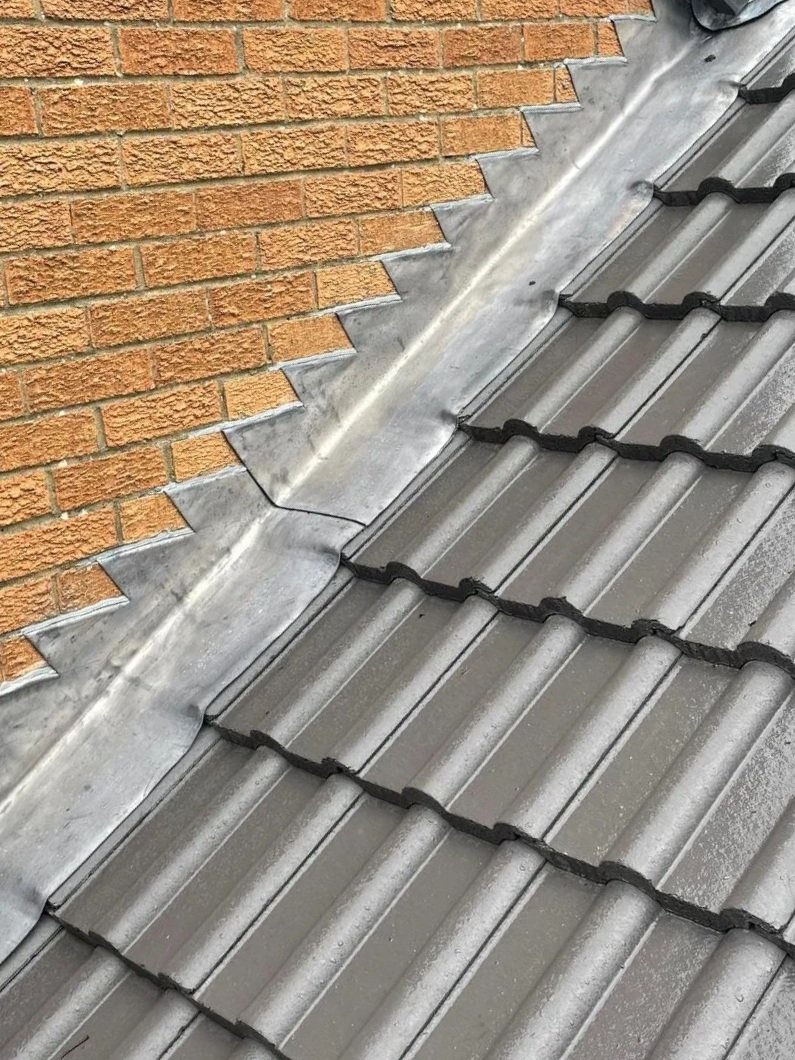
1930s to 1970s semis. Many semis around Kenton, Fawdon and the wider Newcastle suburbs were built with concrete interlocking tiles or plain tiles. The roof structure was designed for that weight, so like-for-like concrete is straightforward and good value. Our full re-roof in Chester-le-Street used Grey Double Roman concrete tiles on just this kind of house.
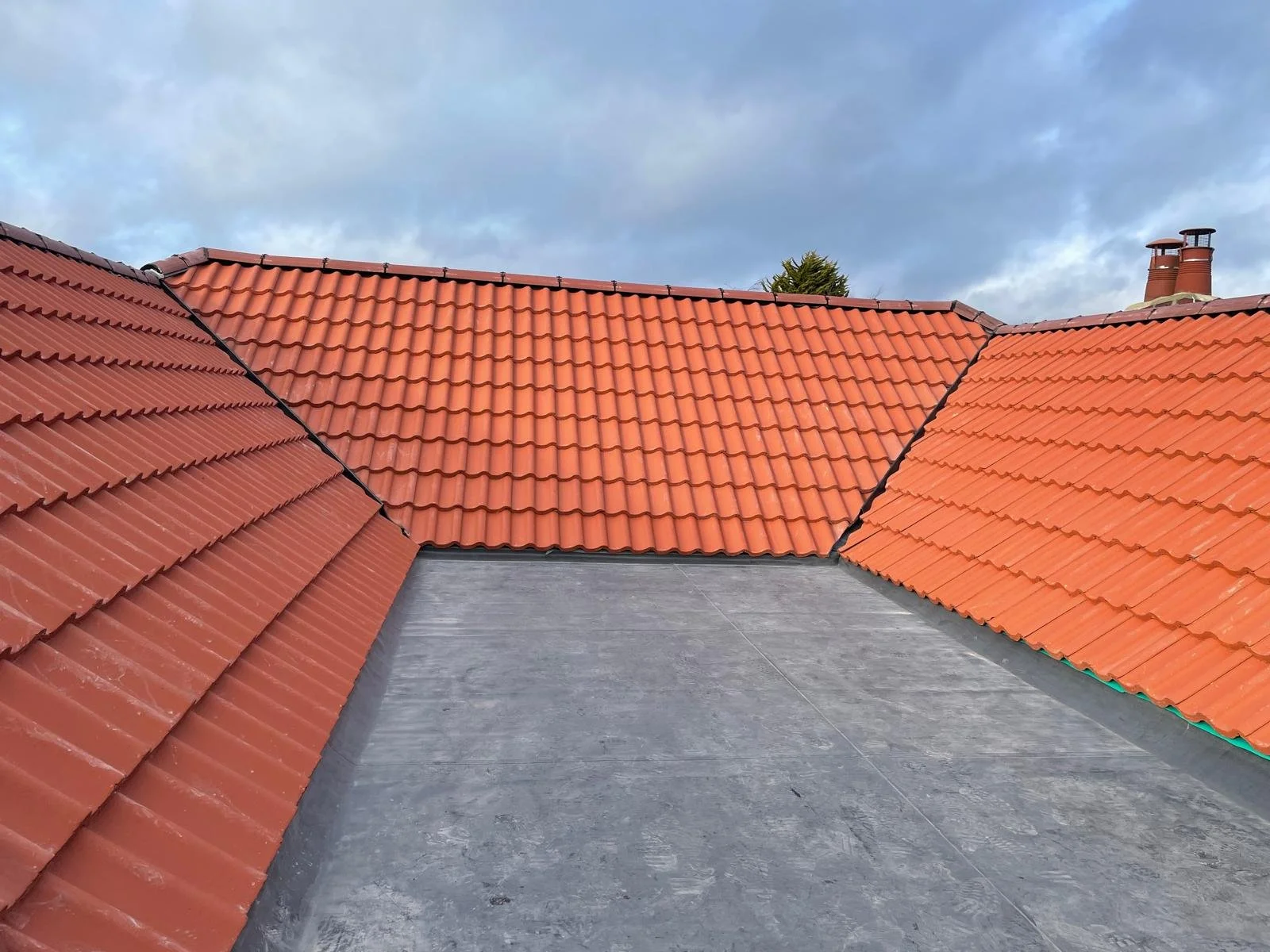
Tiles also come in reds and terracotta shades as well as greys. If you are matching an attached neighbour, colour and profile matter as much as the material. We bring samples so you can see them against the brickwork.
05/Pitch, maintenance and lifespan
- Pitch: concrete interlocking tiles suit shallower roofs than other coverings, which is why they are common on extensions and low-pitched semis. Clay plain tiles generally need around 35°.
- Slate: the stone outlasts the nails. When slates start slipping on an old roof, the cause is usually corroded nails, and a slate that slips can be refixed with a clip.
- Concrete: the surface slowly wears and holds moss, especially on north-facing slopes in North East weather. The tiles stay sound for decades, but they lose their colour.
- Fibre cement: light and neat, with a shorter life than natural slate. Edges can become brittle with age.
- Every covering: ridges, verges, valleys and lead flashings need attention long before the main covering wears out.
How long a roof lasts depends on more than the covering. Underlay, battens and fixings all play a part, and we cover that in our guide to how long a roof lasts.
06/Conservation areas and planning
Re-roofing a house usually does not need planning permission if it does not materially change how the house looks. Swapping slate for concrete tiles can change the look a great deal. In a conservation area, or on a listed building, contact the council before you choose a covering. Some areas also have an Article 4 direction that removes permitted development rights. Parts of Jesmond, Gosforth and Tynemouth are conservation areas, and on those streets the council is likely to expect natural slate to be kept.
07/Common questions
Can you replace a slate roof with concrete tiles?
Yes, but concrete tiles are heavier than slate, so the roof structure needs checking first and Building Regulations approval is likely to be needed. In a conservation area you may also need the council's agreement. On most terraces we recommend staying with slate.
Are clay or concrete roof tiles better?
Clay plain tiles typically last 60 to 100 years and keep their colour, but they cost more and need a steep pitch. Concrete interlocking tiles are cheaper, quicker to lay and suit shallower roofs, with a typical life of 40 to 60 years.
Are fibre cement slates any good?
They are a reasonable budget option where a slate look is wanted and weight is a concern. They typically last 30 to 50 years, which is well short of natural slate, and they can look too uniform on a period terrace.
Choosing the right covering for your roof
We survey roofs across Gosforth, Newcastle and North Tyneside, check the structure and pitch, and give you a fixed written price for each covering that suits your house. See our slating and tiling and new roofs and re-roofs pages for more.