


Roof Valley Repair: Why Valleys Leak and How They Are Fixed
Usually, yes. Most roof valley repair jobs involve clearing debris, re-bedding loose tiles, resealing a split or replacing a short section of the valley lining. If the lining has failed along its length, or the boards and felt underneath are rotten, the whole valley is stripped and relined in lead, GRP or a dry valley trough.
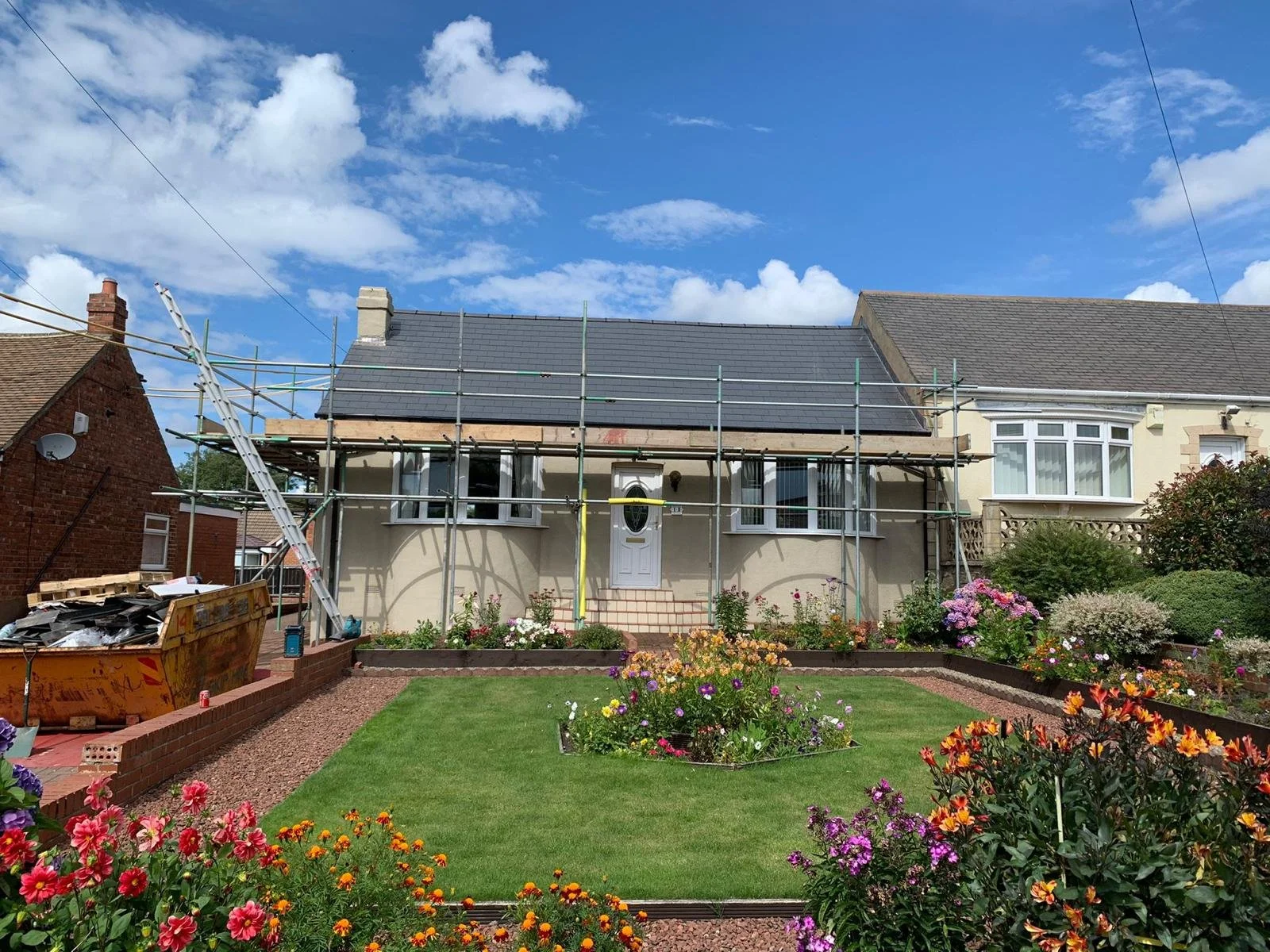
Roof valley repair is one of the most common fixes needed after heavy North East rain. A valley takes the water from two roof slopes at once, so when it fails, the leak is rarely small. The good news is that most valley problems are caught early and fixed without touching the rest of the roof.
01/What a roof valley is
A valley is the internal angle where two sloping roofs meet. You find them where an extension joins the main house, around L-shaped bungalows, on dormers and on many interwar semis across Gosforth, Kenton and Heaton. From the street it looks like a crease running down the roof.
Because rain from both slopes runs into it, a valley carries far more water than any other part of the roof. It has to be lined or built so that water flows straight down into the gutter and never gets under the tiles on either side.
02/The main types of roof valley
There are four types you are likely to find on a North East house. Knowing which one you have helps you understand what a repair involves.
Lead valley
Sheets of lead laid over valley boards to form an open channel. Common on older slate roofs and Tyneside terraces. Our lead flashing guide explains how lead behaves and why it splits.
GRP or fibreglass valley
A preformed glass-reinforced plastic liner that does the same job as lead. It is lighter, has no scrap value to thieves and is widely used on re-roofs.
Dry valley trough
A mortar-free GRP or plastic system. The cut tiles sit against a raised centre rib and are fixed mechanically, with no mortar bedding to crack or wash out.
Mitred or laced tiled valley
The tiles themselves form the valley, either cut and mitred to meet in the middle or woven across with special valley tiles. Found on some clay plain tile roofs. Neat, but slow and skilled to repair.
Many concrete tile roofs from the 1960s onwards also have an open valley with the cut tiles bedded on mortar along each edge. That mortar bedding is often where the trouble starts.
03/Why roof valleys leak
- Split or perished lead. Lead expands and contracts with every change in temperature. Over decades, long lengths or poorly lapped sheets crack, usually at the laps or along the fold.
- Debris and moss. Leaves, moss and grit collect in the channel and dam the water. It then spreads sideways under the tiles. Roofs near trees in Jesmond and Gosforth see this every autumn.
- Failed mortar bedding. On mortar-bedded valleys the cement cracks, goes hollow and washes out. The cut tiles loosen and slide, and water gets in behind them.
- Tiles cut short or too tight. If tiles are cut back too far, water runs off their edge outside the lined area. If they are cut too tight, they narrow the channel and hold debris.
- Old felt and rotten boards. Under the valley lining sits underlay and timber. Old bitumen felt goes brittle, and once water has been getting in for a while, the valley boards rot and sag.
- Storm damage. Slipped or broken tiles can drop into the valley, crack the lining and block the flow. Our storm damage guide covers what to check after a big blow.
Signs your valley is leaking
Valley leaks often show up some distance from the valley itself, because water runs along timbers before it drips. Look out for:
- Damp patches or brown staining on a ceiling below where two roofs meet.
- Wet or dark timber along the valley line when you look in the loft with a torch.
- Moss, leaves or plant growth visible in the valley from the ground.
- Cracked or missing mortar, or cut tiles that look out of line.
- Water overshooting the gutter at the bottom of the valley in heavy rain.
Damp in the loft in winter is sometimes condensation rather than a leak. Our guide to loft condensation and roof ventilation helps you tell the two apart. If water is getting in, act quickly. Wet valley boards rot fast, and a small repair can turn into a full reline.
Roof valley repair or full replacement?
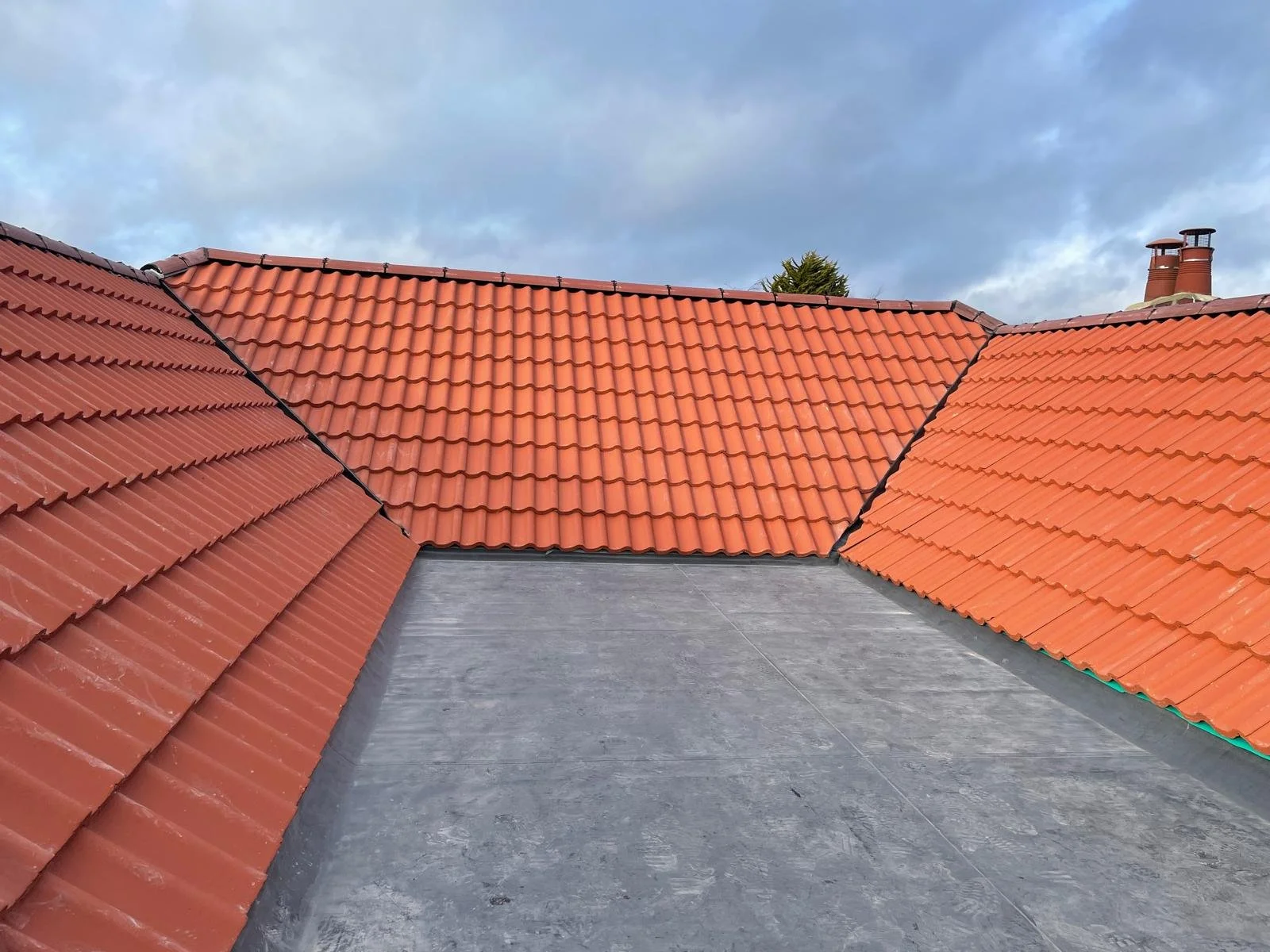
A repair makes sense when the lining is sound and the problem is local. That covers clearing a blocked channel, re-bedding a few loose cut tiles, or patching a single split. A replacement makes sense when the lead has cracked in several places, the GRP has crazed or lifted, the mortar has failed along the whole length, or the boards underneath are soft.
On concrete tile roofs, a dry valley system is a popular choice for a reline because it removes the mortar that tends to fail. On slate roofs, lead or a GRP slate valley keeps the traditional open look. We survey the valley, take photos and give you a fixed written price for the option that suits your roof.
These are typical UK prices from current 2026 cost guides, rounded, for one standard valley:
| Work | Typical cost |
|---|---|
| Minor reseal or re-point | £150 to £400 |
| Re-bed a mortar-bedded valley | £200 to £500 |
| Replace with a dry valley system | £350 to £750 |
| Replace with a GRP valley | £400 to £800 |
| New lead valley | £600 to £1,200 |
| Laced or swept tiled valley repair | £400 to £900 |
Some guides quote small valley repairs from around £90 to £225, so prices vary. Length, roof height, tile type and access all change the figure. Scaffolding is usually extra, and one cost guide puts scaffold to a single elevation at around £400 to £900. A ladder or tower may be enough on a bungalow.
If the valley is part of a wider problem, such as tired underlay across the whole roof, it may be better value to plan a re-roof. Our guide to how much a new roof costs sets out typical prices. If the leak has damaged ceilings, see whether home insurance covers roof leaks.
06/Common questions
How do I know if my roof valley is leaking?
The usual signs are damp staining on a ceiling below where two roofs meet, wet timber along the valley in the loft, moss or debris sitting in the valley, and cracked mortar or loose cut tiles along its edges.
Can a lead valley be repaired or does it need replacing?
A single small split in otherwise sound lead can sometimes be repaired. If the lead has cracked in several places or the boards underneath are rotten, relining the whole valley is the lasting fix.
What is a dry valley?
A dry valley is a mortar-free valley trough, usually made from GRP or plastic. The cut tiles sit against a raised centre rib and are fixed mechanically, so there is no mortar bedding to crack and wash out.
How much does roof valley repair cost in the UK?
Typical 2026 guide prices run from about £150 to £400 for a minor reseal, and from about £350 to £1,200 to replace a valley depending on the material. Scaffolding and access are usually extra.
Leak where two roofs meet?
We check roof valleys across Gosforth, Jesmond, Newcastle and North Tyneside, show you photos of what we find and give you a fixed written price. See our lead roofs and valleys, roof repairs and slating and tiling pages for more.