


Dry Ridge vs Mortar Ridge: Which Is Better for Your Roof?
Dry Ridge vs Mortar Ridge: Which Is Better for Your Roof?
A dry ridge system fixes ridge and hip tiles with screws, clips and a ventilated roll strip instead of a mortar bed, so there is no mortar to crack and fall out. A mortar ridge gives a traditional look and costs less up front, but under BS 5534 it must now be mechanically fixed as well. Fitting a dry ridge typically costs £40 to £75 per metre, or roughly £900 to £1,600 on a typical semi.
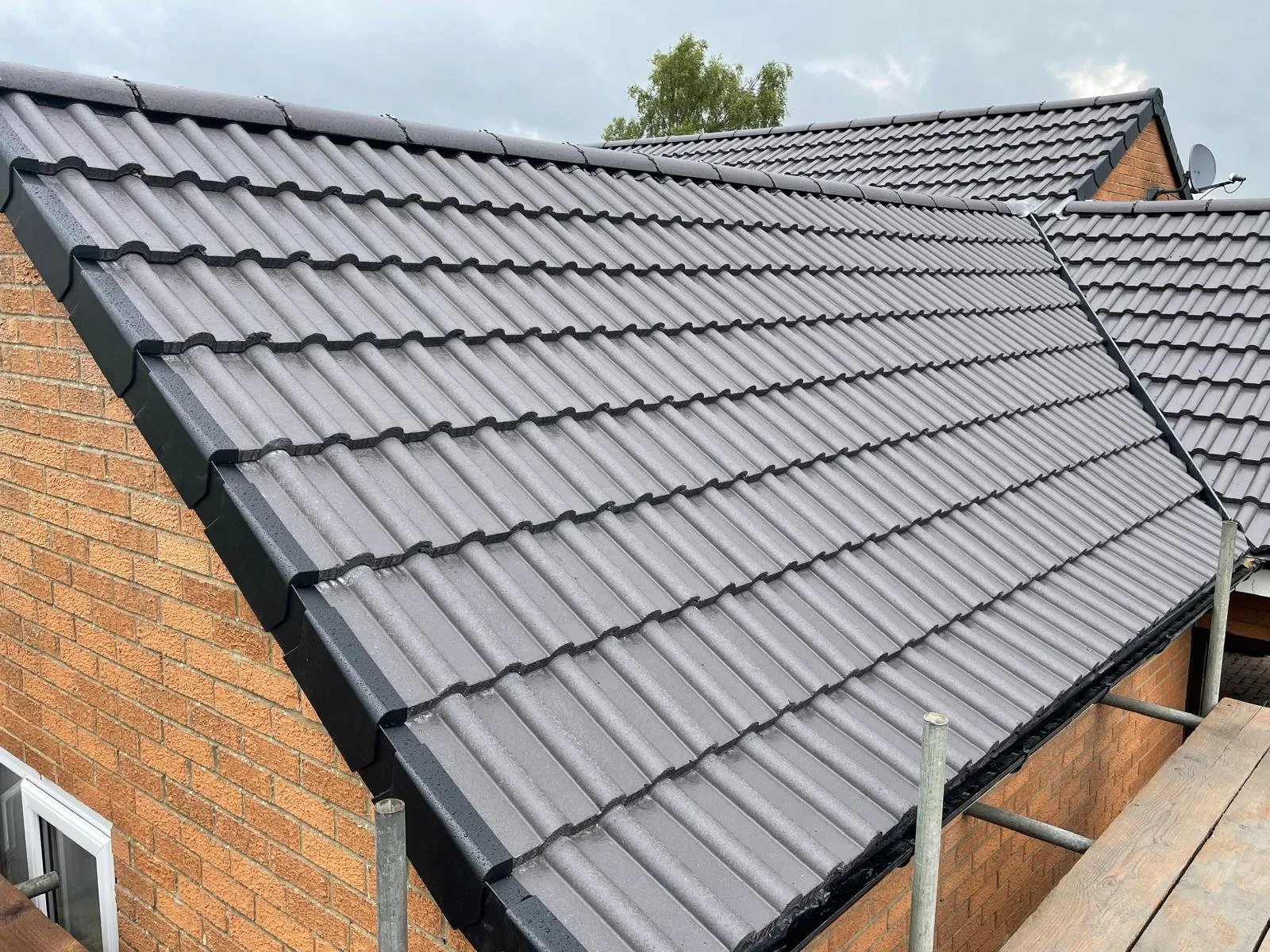
The dry ridge vs mortar ridge question comes up on almost every tiled roof we survey in Newcastle. This guide covers what ridge and hip tiles do, how each fixing method works, what the British Standard now requires, the signs your ridge mortar is failing and what the work typically costs. If your question is about the gable edges of the roof, our separate guide to dry verge versus mortar verge covers those.
01/What ridge and hip tiles do
The ridge is the line where two roof slopes meet at the top. The tiles on a pitched roof stop short of that line, which leaves a gap. Ridge tiles sit over the gap and shed water down onto the slopes either side.
Hips do the same job on the sloping corners of a hipped roof, where two slopes meet at an angle running down to the eaves. Hip tiles take more water than ridge tiles because rain runs along them as well as off them.
Both sit at the most exposed part of the roof. On the coast at Tynemouth or up on a rise in Kenton, they take the full force of the wind. If they are not held down properly, they are usually the first tiles to lift in a storm.
02/Dry ridge vs mortar ridge: how each one is fixed
A mortar ridge is the traditional method. The roofer lays a bed of sand and cement along the top edge of the tiles on each slope, presses the ridge tiles into it and points the joints between them. On a modern mortar ridge the tiles are also fixed to a timber ridge batten with screws, clips or straps.
A dry ridge system uses no mortar. A ridge batten is fixed on brackets at the apex. A roll of flexible, ventilated material is laid over the batten and dressed down onto the tiles each side to keep out rain and wind. Each ridge tile is then screwed or clipped to the batten, and union clips seal the joints between tiles.
What BS 5534 says about fixing ridge tiles
BS 5534 is the British Standard code of practice for slating and tiling. The 2014 revision changed the rules for ridges and hips. Mortar alone can no longer be relied on to hold ridge and hip tiles in place. They must also be mechanically fixed.
- Mortar is still allowed as a bedding, provided each ridge and hip tile is also screwed, clipped or strapped down.
- A dry fix system meets the requirement on its own, as long as it is tested to BS 8612, the product standard for dry-fixed ridge, hip and verge systems.
- Single-lap tiles across the main roof slope also need mechanical fixing under the same revision.
Building control, warranty providers and manufacturers all expect it to be followed on new roofs and re-roofs, so any reputable roofer will work to it. If someone offers to re-bed your ridge in mortar with no fixings at all, ask them why.
04/Pros and cons of each
| Factor | Mortar ridge | Dry ridge |
|---|---|---|
| Look | Traditional, with visible mortar lines | Neater and more uniform, with a visible seal strip at the edges |
| Maintenance | Mortar cracks and needs repointing over time | Little maintenance, nothing to wash out |
| Ventilation | Sealed unless vented ridge tiles are added | Most systems vent the roof space along the ridge |
| Weather on the day | Mortar needs dry weather and should not be laid in frost | Can be fitted in most conditions |
| Cost | Cheaper up front | Higher up front, less upkeep later |
The ventilation point matters more than people expect. A ventilated ridge lets warm, damp air out of the top of the roof space, which helps with loft condensation. Our guide to loft condensation and roof ventilation explains why that matters on older North East houses.
On listed buildings and some period houses in conservation areas, a traditional mortar ridge may be the better choice to keep the original look. Parts of Jesmond and Gosforth fall into this category. If you are unsure, check with Newcastle City Council before changing how a front-facing roof looks.
Signs your ridge mortar is failing
Ridge mortar takes a battering from rain, frost and the sun. Over time it shrinks, cracks and loses its grip on the tiles. These are the signs we look for on a survey:
- Cracks along the mortar bed or in the joints between ridge tiles.
- Lumps of mortar in the gutter, on the path or on a flat roof below.
- Ridge or hip tiles that look out of line, or that rock or rattle in the wind.
- Gaps you can see daylight through from the loft, at the top of the roof.
- Damp staining on the top-floor ceiling or on the timbers near the ridge.
- A ridge tile missing after a storm.
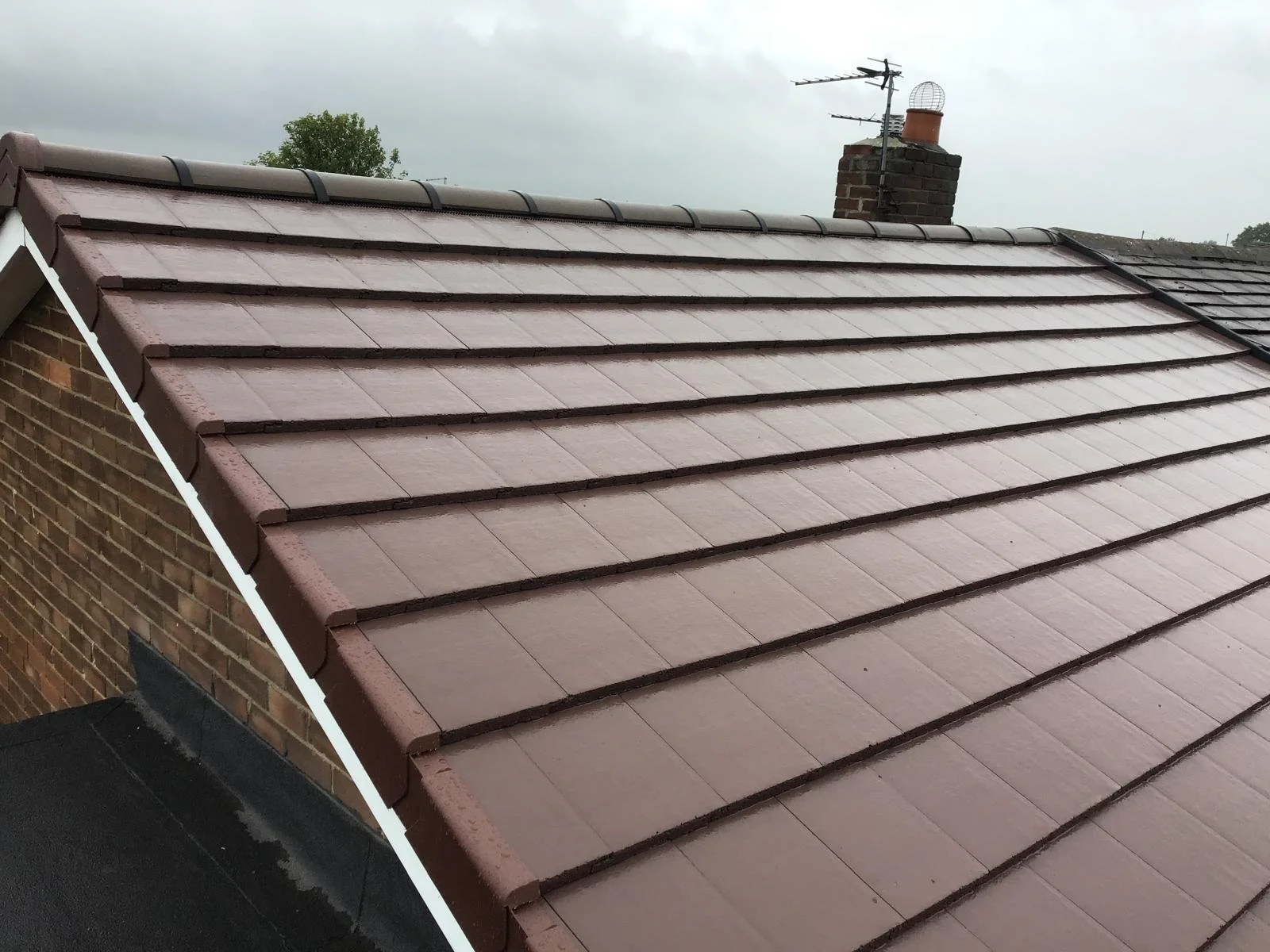
Hairline cracks in the pointing can often be dealt with by ridge tile repointing. Once tiles are loose or the bed has come away, repointing will not hold them. They need lifting, cleaning and re-fixing, either back into fresh mortar with mechanical fixings or onto a dry ridge system. See our pointing and re-pointing page for how we approach this.
What ridge work typically costs
| Job | What's involved | Typical cost |
|---|---|---|
| Repoint ridge | Rake out and repoint joints, tiles left in place | £20 – £30 per metre |
| Re-bed ridge in mortar | Lift, clean and re-bed ridge tiles on a terrace to a detached house | £400 – £1,000 |
| Dry ridge system | Supply and fit, per metre of ridge | £40 – £75 per metre |
| Dry ridge, typical semi | Strip old mortar ridge and fit dry ridge | £900 – £1,600 |
| Dry hip | Added to a dry ridge job, per hip | £300 – £400 |
These are typical UK ranges from current price guides. Scaffold or access equipment is often needed for ridge work and can add £300 to £900. Broken ridge tiles that need replacing, or rotten battens found once the old ridge is off, add to the price. If you are planning a full re-roof, the ridge is done as part of it, so see our new roofs and re-roofs page.
Common questions
Is a dry ridge better than a mortar ridge?
For most houses, yes. A dry ridge needs less maintenance, is not affected by mortar cracking and usually ventilates the roof. A mortar ridge with proper mechanical fixings is still a sound option, and may be preferred on listed or period houses where the traditional look matters.
Can you fit a dry ridge to an existing roof?
Yes. We lift the old ridge tiles, clear off the mortar, fix a ridge batten and fit the dry ridge system. The original ridge tiles can often be reused if they are sound and compatible with the system.
Can ridge tiles just be repointed?
Only if the tiles are still firmly bedded and the problem is limited to cracked joints. If tiles are loose or the bed has failed, repointing will not hold them, and they need re-bedding with mechanical fixings or a dry ridge.
Does BS 5534 mean my old mortar ridge is illegal?
No. The standard applies to new work, so an existing mortar ridge does not have to be changed. When the ridge is re-bedded or replaced, the tiles should be mechanically fixed to meet the current standard.
Getting your ridge looked at
We check ridges and hips across Gosforth, Newcastle and North Tyneside, take photographs from the roof and give you a fixed written price for repointing, re-bedding or a dry ridge. See our ridge, hips and dry verge and pointing pages for more on the work.