


Dry Verge vs Mortar Verge: Problems, Costs & Which Is Best
Dry Verge vs Mortar Verge: Problems, Costs & Which Is Best
A dry verge is a set of interlocking plastic caps that finish the edge of a tiled roof at the gable end, fixed mechanically instead of bedded in mortar. It stops mortar cracking and falling out, and meets current British Standards for new roofs. Fitting dry verge to a typical gable usually costs £250 to £600, or £500 to £1,000 for both gables of a semi.
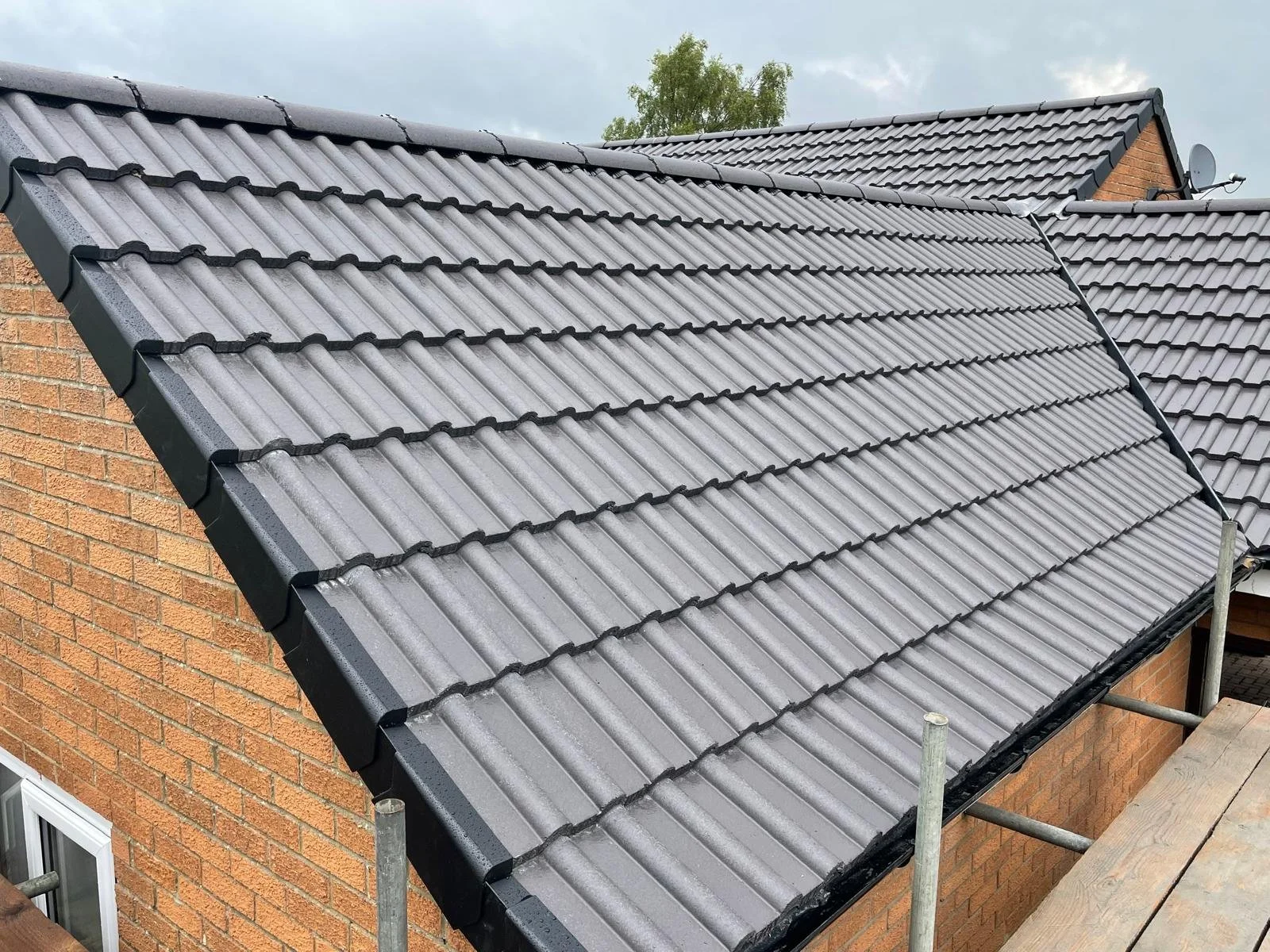
If mortar is dropping from the edge of your roof onto the drive, you have probably been told you need a dry verge. Here is how the two systems compare, the problems to watch for, and what the job should cost.
01/Mortar verge vs dry verge
| Mortar verge | Dry verge | |
|---|---|---|
| How it's fixed | Tiles bedded on sand and cement | Plastic caps clipped and screwed to the battens |
| Typical life | 10–20 years before re-pointing | 20–30+ years with little maintenance |
| Appearance | Traditional, suits period houses | Clean, uniform, visible plastic edge |
| Building regs (new roofs) | Must also be mechanically fixed | Meets BS 5534 and BS 8612 |
| Common failure | Mortar cracks, drops out and tiles loosen | Cheap caps crack, fade or blow off |
Since 2015, British Standard BS 5534 has required every tile at the verge to be mechanically fixed on new roofs and re-roofs, rather than relying on mortar alone. You can still use a traditional mortar verge, but the tiles underneath must be nailed or clipped too. Most roofers now fit a dry verge system that meets BS 8612 because it covers that requirement and removes the mortar maintenance.
02/Signs your verge needs attention
- Pieces of mortar on the ground or in the gutter below the gable end.
- Gaps you can see daylight through between the tiles and the gable wall.
- Loose or rocking verge tiles, especially after strong winds.
- Damp on the inside of the gable wall in a bedroom or loft.
- On an existing dry verge: cracked, brittle or missing caps, or a missing end cap at the eaves.
Common dry verge problems
Dry verge is a good system, but it isn't foolproof. Most of the failures we are asked to fix come from one of three causes.
Cheap units
Most commonBudget plastic caps go brittle in UV light within a few years, crack in frost and can be blown off in high winds. Quality systems cost only slightly more.
Wrong system for the tile
Poor fitEach dry verge is designed for particular tile profiles. Fitted to the wrong tile, the caps don't seat properly and leave gaps for wind and birds.
Poor fixing
InstallationMissing starter or end caps, battens not extended to the verge, or units only clipped rather than screwed. These fail at the first big storm.
Dry verge is a popular cold-call job. A proper installation involves removing the old mortar, checking and extending the battens, and fixing every tile, not just clipping caps over the top of cracked mortar.
Dry verge costs
| Job | What's involved | Typical cost |
|---|---|---|
| Re-point mortar verge | Rake out and re-bed one gable | £200 – £450 |
| Dry verge, one gable | Strip mortar, fix tiles and fit a quality dry verge | £250 – £600 |
| Dry verge, both gables | Typical semi-detached house | £500 – £1,000 |
| Dry verge and dry ridge | Both gables plus the ridge on a semi | £1,200 – £2,200 |
Most verges on two-storey houses can be reached with ladders and roof ladders or a tower. Three-storey properties or awkward access may need scaffold. If the ridge mortar is also cracking, doing both at once is usually the best value. Our dry ridge and dry verge page covers that work.
05/Which should you choose?
Dry verge
The best choice for most concrete-tiled estate houses, semis and new-builds. Low maintenance, compliant and tidy.
Mortar verge
Better on period and slate roofs, or in conservation areas where plastic caps would look out of place. Fix the tiles mechanically underneath.
Repair
If only a short length of mortar has dropped out and the rest is sound, re-bedding that section may be all you need.
Common questions
Is dry verge a legal requirement?
Not dry verge specifically, but on new roofs and re-roofs every verge tile must be mechanically fixed under BS 5534. A dry verge system is the most common way of meeting that. Existing mortar verges don't have to be changed unless the roof is being re-roofed.
Can dry verge be fitted to slate?
There are dry verge systems for slate, but on natural slate roofs a traditional mortar or slate-and-a-half verge usually looks better, especially on period houses.
How long does dry verge last?
A quality dry verge system typically lasts 20 to 30 years or more. Cheap units can become brittle in as little as five years, which is why the brand and system matter.
Getting your verges sorted
We fit quality dry verge and dry ridge systems across Gosforth, Newcastle and North Tyneside, and re-bed traditional verges where that suits the house better. See our roof repairs page for related work.