


Velux Window Leaking? How to Find the Cause and Fix It
Velux Window Leaking? How to Find the Cause and Fix It
Most Velux windows leak because leaves and moss block the flashing at the top of the window, the flashing kit has lifted or failed, or the seals between the sash and frame have perished. Water between the two panes means the glazing unit has failed. Water on the inside of the glass in cold, dry weather is often just condensation.
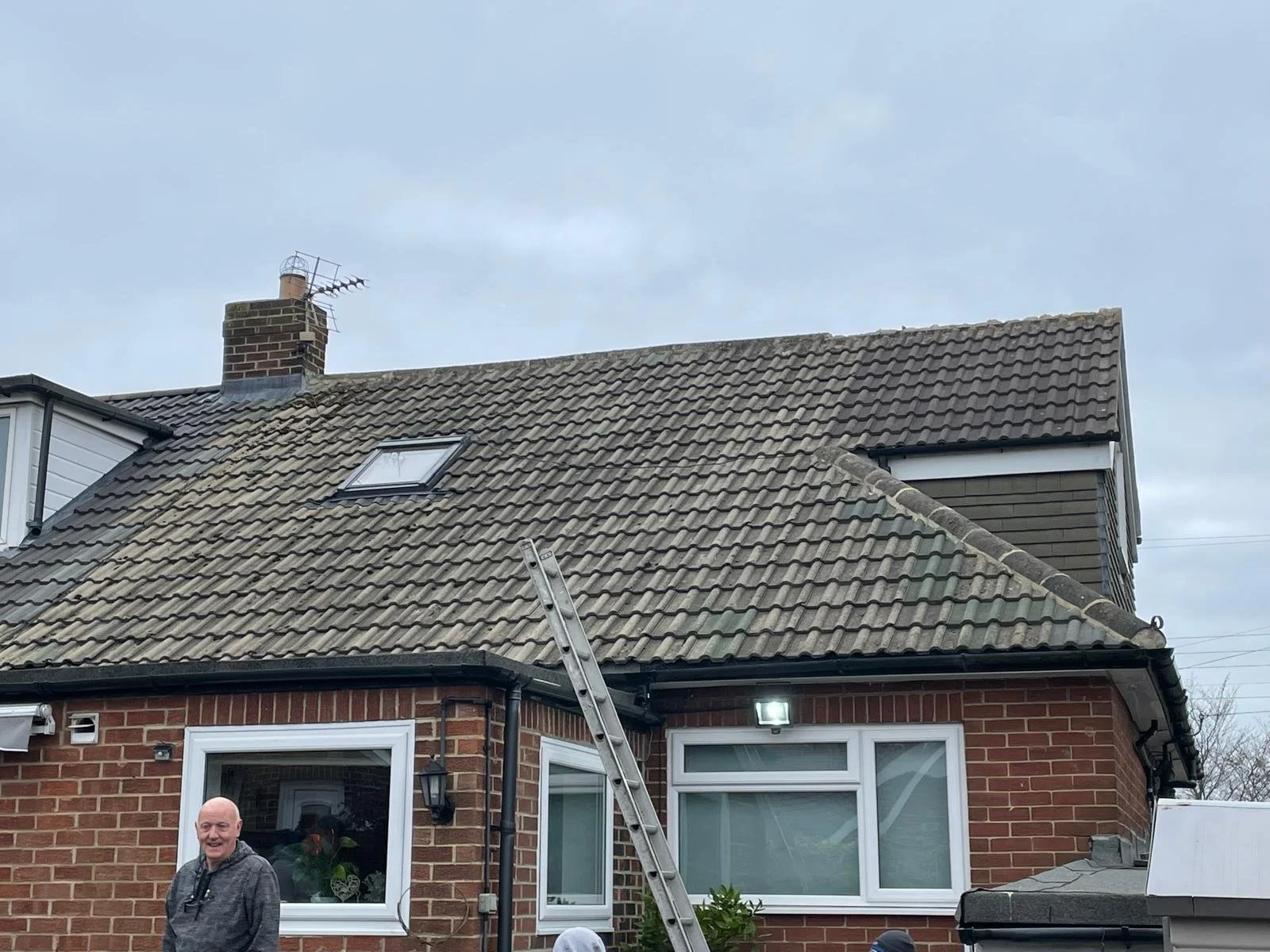
A Velux window leaking into a loft room is one of the most common calls we get across Gosforth, Jesmond and the rest of Newcastle. The good news is that most roof window leaks come from a handful of places, and several can be ruled in or out from inside the house. This guide covers where the water gets in, what you can check safely, the fixes and what they typically cost.
Velux is a brand name, but most people use it for any roof window or skylight. Fakro, Keylite and other makes are built on the same principle, with a frame, a sash, a sealed glazing unit and a flashing kit that weathers it into the roof. A roof window leaking from any of these makes usually comes down to the same faults.
01/Where a roof window leaks from
A roof window sits in a hole cut through the roof, so it relies on the flashing kit to carry rainwater around it. The top section tucks under the tiles above and channels water to the sides. The side pieces run it down past the frame. The apron at the bottom sits over the tiles below and lets the water run off onto them. If any part of that path is blocked or broken, water goes somewhere it should not.
Where the stain appears inside gives you a clue. Water at the top of the window reveal usually points to the flashing or debris above the window. Drips from the sash itself point to the seals. Water at the bottom of the lining can be any of them, because water runs downhill before it shows.
02/Is it a leak or condensation?
Before anyone goes up a ladder, rule out condensation. VELUX itself lists condensation as the first thing to check when a window appears to be leaking. Warm, moist air from the room meets the cold glass and turns to water, which then runs down onto the frame and lining. It is most common in winter, in bathrooms and bedrooms, and on cold, still mornings.
A real leak tends to follow rain. Condensation tends to follow cold weather, cooking, showers and drying washing indoors. If your skylight is leaking only on frosty mornings with no rain, it is likely condensation. Our guide to loft condensation versus roof leaks goes through the signs in more detail.
03/What you can check safely from inside
You do not need to get on the roof to narrow it down. Do not climb onto a pitched roof yourself. These checks can all be done from the loft room.
- Make sure the window is fully closed and the handle locked. A sash left on the vent position can let driven rain in.
- Note when it happens. After heavy rain, in wind from one direction, or on cold dry mornings.
- Look between the two panes of glass. Misting or droplets you cannot wipe off mean the glazing unit has failed.
- Open the sash and look at the rubber seals around the frame. Cracked, flattened or missing sections let water past.
- With the window open on a dry day, look at the top of the flashing. Leaves, moss or tile debris sitting there is a likely cause.
- Check the lining and plaster around the window for staining, and mark the edge of any patch so you can see if it grows.
- Find the data plate, usually behind the ventilation flap on the top of the sash. It gives the model and size, which helps if parts or a replacement are needed.
The fixes, from smallest to biggest
Clear debris
VELUX advises clearing leaves and debris from the flashing around the window once a year so rainwater flows freely. On a tree-lined street in Gosforth or Jesmond this is often all it needs.
Replace seals
Perished seals between the sash and frame can usually be replaced without disturbing the roof. Parts depend on the make and age of the window.
Replace the flashing kit
If the flashing is split, bent or was fitted badly, a new kit means lifting the surrounding tiles, fitting the kit and relaying them.
Retile around the window
Cracked or slipped tiles near the window, or a missing underlay collar, can let water in even when the flashing is sound. We reflash and retile as one job.
Replace the glazing
A misted or cracked sealed unit will not repair itself. Depending on the model, the pane or the whole sash can be swapped.
Replace the window
On an old window with several faults at once, a like-for-like replacement with a new flashing kit is usually the better value.
Most of these are roofing jobs. Flashing and retiling work is covered on our roof repairs page, and any lead work around chimneys or valleys near the window on our lead roofs and valleys page.
05/What a Velux window leaking repair typically costs
| Job | What's involved | Typical cost |
|---|---|---|
| Flashing kit (parts) | Replacement kit for a standard pitched-roof window | £80 – £200 |
| Labour | A day for a roofer or fitter | £200 – £325 |
| Like-for-like replacement | New window and flashing fitted in the same opening | £550 – £1,300 |
| Scaffold | Where a ladder or tower is not enough | From around £500 |
These are typical UK ranges from current trade and price guides. Clearing debris and replacing seals are small jobs priced on the day. Window size, electric or solar models, the type of tile and access all change the price. A single window on a two-storey house can often be reached without full scaffold.
When to replace rather than repair
A well-maintained roof window lasts a long time, and VELUX says its windows are designed to last a generation. Repair still makes sense on a sound window with a single fault. Replacement starts to make more sense when:
- There is condensation between the panes on an older window, so the glazing has failed.
- The frame or sash timber is soft, rotten or swollen from years of water.
- The flashing, seals and glazing all need work at the same time.
- It is single glazed, draughty, or parts are no longer made for it.
- The roof around it is being retiled or re-roofed anyway.
Most like-for-like replacements are done from inside the room in a few hours, using the same opening. Building Regulations apply to replacement glazing, so ask whoever fits the new window how the work will be certified. Our Velux and roof windows page covers fitting and replacement.
Water that runs behind the lining for months can rot the window frame and roof timbers and damage plaster and insulation. A small flashing fix now costs far less than repairing the timbers later. Read more in our guide to water ingress.
Common questions
Why is my Velux window leaking when it rains?
Leaks that only appear in rain usually come from the outside. The most common causes are leaves and moss blocking the flashing at the top of the window, a lifted or damaged flashing kit, cracked tiles beside the window, or perished seals between the sash and frame.
Why is there water between the panes of my roof window?
Moisture or misting between the two panes means the seal on the double-glazed unit has failed. It cannot be wiped away or dried out. The glazing or sash needs replacing, or on an older window the whole window.
Can a leaking Velux window be fixed without replacing it?
Often, yes. Clearing debris, replacing seals or fitting a new flashing kit fixes many leaks on a window that is otherwise in good condition. Replacement is better value when the glazing has failed, the timber is rotten or several parts need work at once.
How much does it cost to fix a leaking Velux window?
A replacement flashing kit typically costs £80 to £200 for the parts, plus labour of around £200 to £325 a day. Replacing the whole window like for like typically costs £550 to £1,300. Scaffold, where needed, adds from around £500.
Getting your roof window looked at
We check leaking roof windows across Gosforth, Newcastle and North Tyneside, photograph what we find and give you a fixed written price for the repair. See our roof windows, roof repairs and lead and valleys pages for related work.